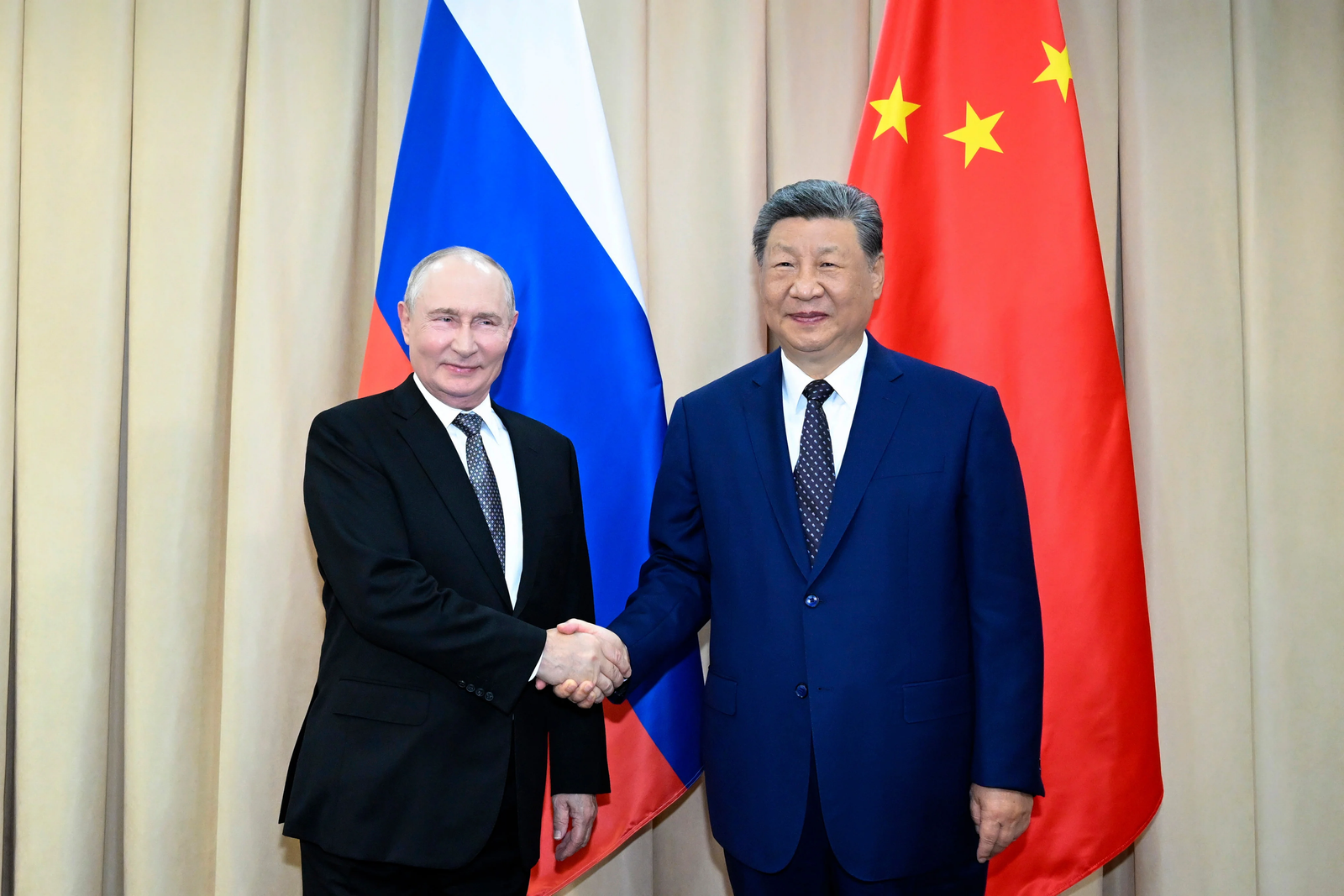
BISHKEK, Kyrgyzstan — September 2, 2026 — Chinese President Xi Jinping has called for deeper cooperation with Russia as he met President Vladimir Putin on the sidelines of the Shanghai Cooperation Organisation (SCO) summit in Bishkek, signaling that Beijing intends to keep strengthening its strategic relationship with Moscow despite an increasingly unsettled international environment.
The meeting took place on August 31 as leaders from China, Russia, India and other SCO members gathered in the Kyrgyz capital. The summit has provided an important platform for major non-Western powers to discuss security, economic cooperation and the future shape of global governance.
Xi Warns of Growing Global Uncertainty
Xi told Putin that the foundations of China-Russia relations would continue to strengthen under the strategic direction of both leaders.
He also pointed to what Beijing sees as growing uncertainty in international affairs, while arguing that the broader desire for peace, development and cooperation remains strong.
China has increasingly presented its relationship with Russia as part of a wider effort to promote a more multipolar international system. During the SCO meetings, Xi advocated greater cooperation among member states and called for changes to global governance that Beijing says would make the international system more balanced.
The message reinforces China’s effort to deepen relationships outside the traditional Western-led alliance system.
Putin Seeks Wider Cooperation With China
Putin also used the meeting to emphasize areas where Moscow wants closer cooperation with Beijing.
Among the issues discussed were technological development, including artificial intelligence and digital innovation. Putin has increasingly highlighted technology as an area where Russia wants to expand international partnerships as it faces restrictions and reduced access to some Western markets.
The two countries have also been looking for ways to increase contacts between their populations and businesses. Putin reportedly proposed moving toward a permanent visa-free travel arrangement between China and Russia, a step that could encourage tourism and commercial exchanges.
Such initiatives suggest that the relationship extends well beyond traditional diplomatic and security cooperation.
SCO Becomes an Important Diplomatic Stage
The meeting occurred during the 2026 SCO summit, where leaders from 10 member states gathered in Bishkek.
China and Russia have increasingly used the organisation as a venue for promoting cooperation among countries that do not want the international system dominated by Western powers. India, Iran, Pakistan and other member states also took part in the summit, giving the gathering a broader geopolitical significance.
However, the organisation is not a unified political bloc. Its members have their own competing interests and disagreements, including tensions between India and China and between India and Pakistan.
That makes the continued closeness between Beijing and Moscow particularly significant. Rather than depending entirely on the SCO as a collective alliance, China and Russia appear to be using the organisation alongside their own bilateral relationship.
A Partnership With Unequal Weight
Although Beijing and Moscow describe their relationship as a strategic partnership, the balance between the two countries has changed considerably in recent years.
Russia has become increasingly dependent on China for trade, investment and access to markets as Western sanctions have reshaped its economy. China, meanwhile, has benefited from access to Russian energy and raw materials while expanding its influence across Eurasia.
That imbalance has led some analysts to describe Russia as the more dependent partner.
Yet both governments continue to see advantages in maintaining close ties. Moscow gains a powerful economic and diplomatic partner, while Beijing gains a major strategic relationship with a nuclear-armed country that shares its opposition to several aspects of the U.S.-led international order.
Ukraine Remains a Major Background Issue
The Russia-Ukraine war remains an important backdrop to the relationship.
China has avoided condemning Moscow’s invasion while repeatedly calling for negotiations and a political settlement. Russia, meanwhile, continues to face Western sanctions and international pressure over the conflict.
The two countries’ continued cooperation is therefore being closely watched in Washington and European capitals.
The meeting also came as diplomatic activity around Russia’s international relationships continued to increase. Russian officials have said that a possible future meeting involving Putin, Xi and U.S. President Donald Trump could take place at the Asia-Pacific Economic Cooperation summit in China in November, although Washington has not confirmed Trump’s attendance.
What Comes Next?
Xi’s meeting with Putin demonstrates that China has no immediate intention of weakening its relationship with Russia.
Instead, Beijing appears determined to deepen cooperation in areas ranging from technology and trade to diplomacy and global governance. At the same time, China is continuing to cultivate relationships with other major powers, including India and countries across the Middle East and developing world.
The result is a rapidly changing geopolitical landscape in which China is seeking to position itself as a central player rather than simply a participant in a system dominated by Washington and its allies.
For Russia, maintaining close ties with China remains strategically valuable as the country confronts continuing economic and diplomatic pressure from the West.
Whether the partnership can continue expanding without encountering significant disagreements will depend on developments in Ukraine, global trade, energy markets and the broader competition between China and the United States.
For now, however, Xi’s message to Putin is clear: despite the uncertainties surrounding the international system, Beijing intends to keep its relationship with Moscow on a stronger footing.